
01
Register the observed asset.
Record the resource, initiating provider, dependency path, first-seen and last-seen state, and the pages where it operates.
ISO/IEC 27001:2022 • ISMS EVIDENCE FOR THE BROWSER
Bring dynamically loaded client-side assets and third-party services into the asset, supplier, risk-treatment, monitoring, and internal-review processes already operating within your ISMS.

EXTEND THE ISMS TO THE DELIVERED WEBSITE
The code delivered to a visitor can change independently of a source repository or procurement list. A browser-focused operating process adds observed assets, supplier relationships, risk decisions, and monitoring evidence to the wider ISMS without claiming to replace it.
Record the resource, initiating provider, dependency path, first-seen and last-seen state, and the pages where it operates.
Use observed browser code, provider relationships, authorization, and behavior context alongside the ownership, purpose, and risk treatment maintained in the ISMS.
Retain policy state, monitoring findings, investigations, and evidence for internal audit, management review, and improvement activities.
ASSET AND CLOUD-SERVICE CONTEXT
A contractual vendor entry rarely shows every script, domain, dependency, or browser capability introduced by the service. Move from the provider list into a runtime profile that explains what the supplier actually contributes to the delivered website.
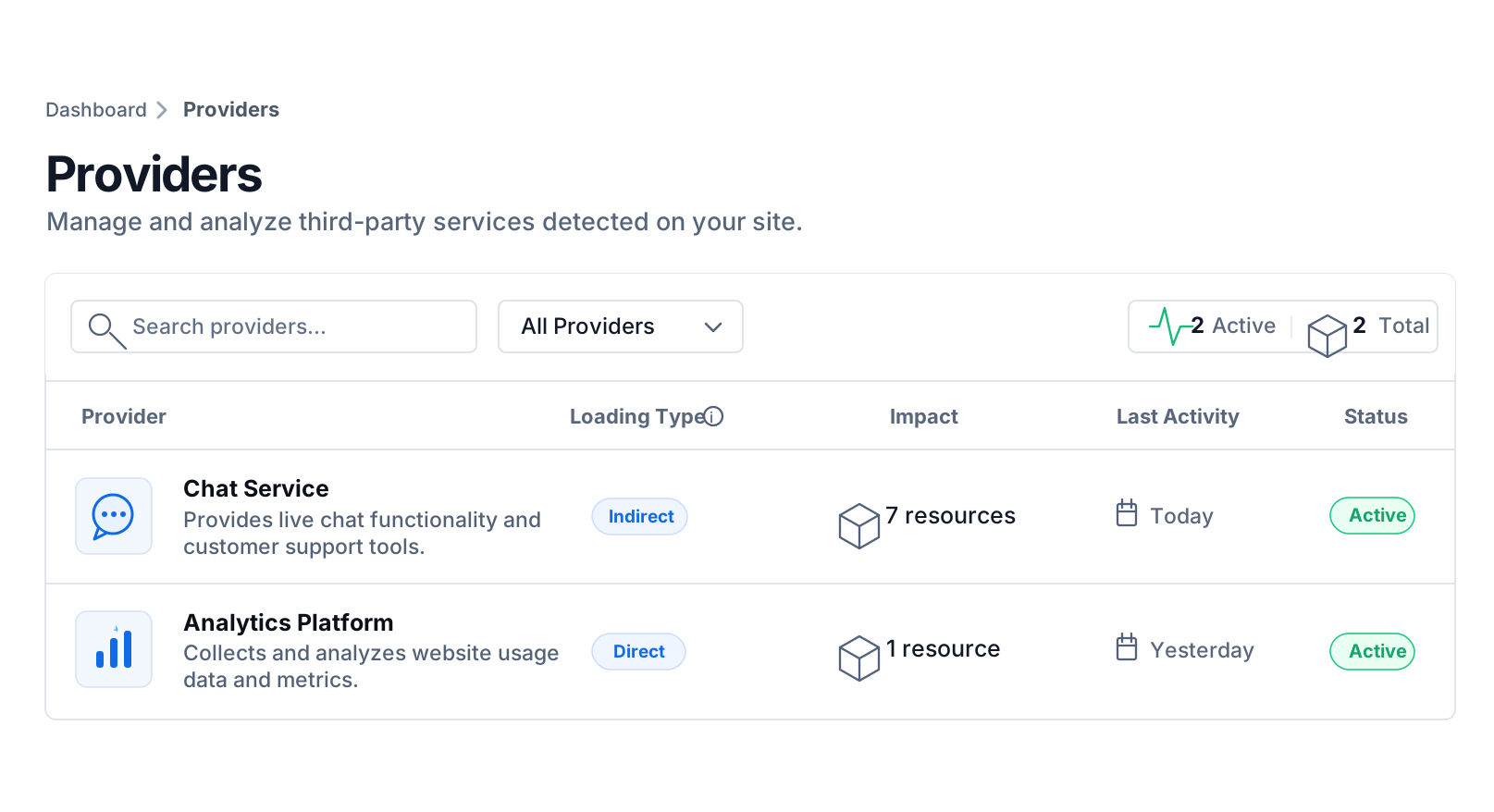
STATEMENT OF APPLICABILITY CONTEXT
Evidence becomes useful to an ISMS when its purpose is explicit. Connect asset, supplier, configuration, and monitoring records to selected ISO/IEC 27001:2022 Annex A control processes where the browser layer falls within scope.
Maintain a browser-observed inventory of client-side resources with provider, dependency, first-seen, last-seen, authorization, and business-purpose context.
Identify third-party services executing in the browser and retain provider-review, resource, behavior, destination, and incident context as supplier-risk evidence.
Monitor supported script integrity and security-impacting HTTP header state, then keep findings, audit observations, and the latest disposition available when the observed state changes.
Continuously observe supported client-side events, resource behavior, capabilities, and destinations, and route meaningful findings into investigation workflows.
RISK TREATMENT IN OPERATION
Risk acceptance, reduction, or restriction should result in an observable technical state. Establish a global baseline, inherit it across providers, and narrow permissions for resources whose purpose or risk profile requires a more restrictive treatment.
Require review before an unfamiliar browser resource becomes part of the trusted operating baseline.
Apply the approved global treatment while retaining narrower provider or resource-level decisions where risk requires them.
Limit supported storage, DOM, network, device, and other browser access according to the documented treatment decision.
MONITORING, TRIAGE, AND IMPROVEMENT
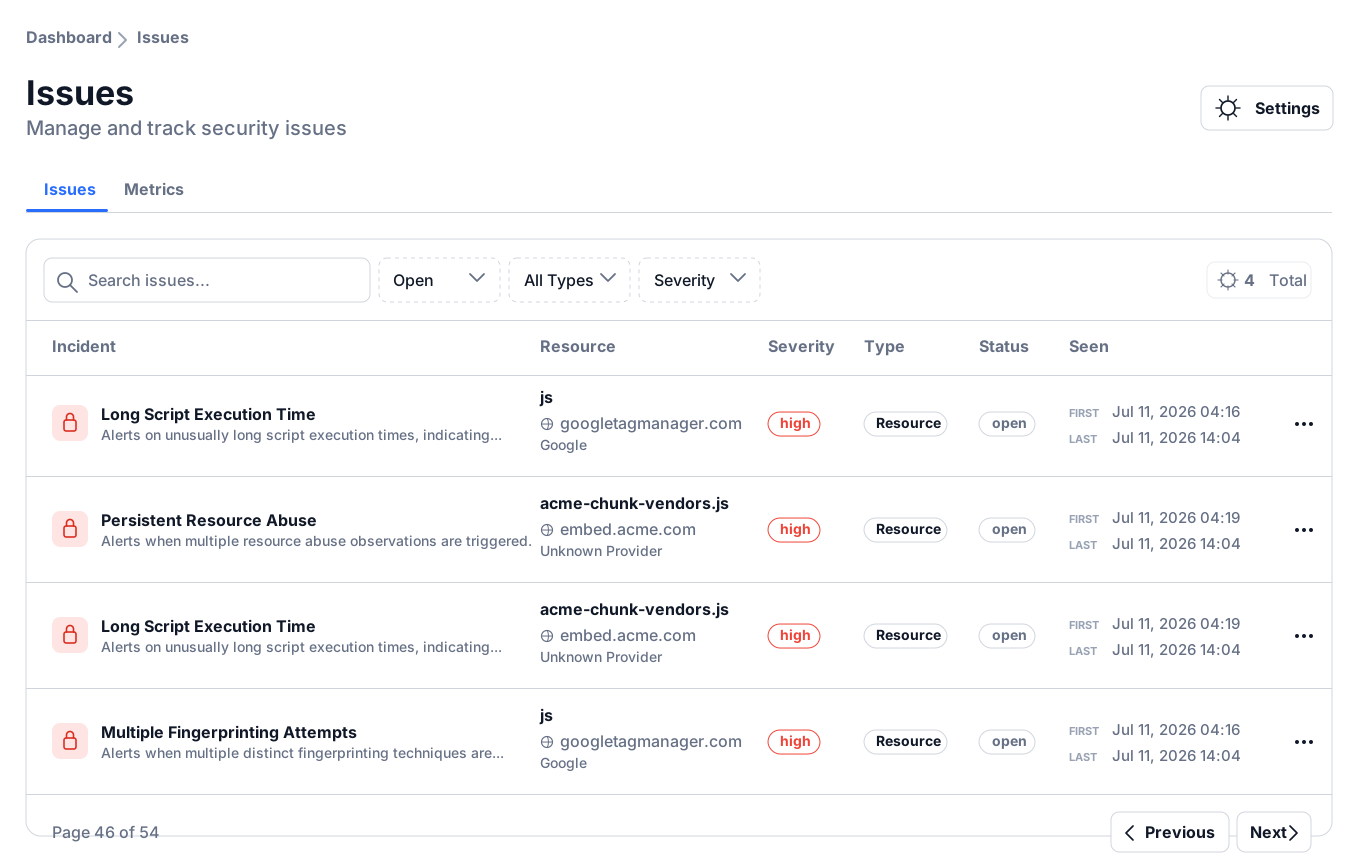
A new asset, integrity deviation, changed destination, or unusual capability is an event to assess—not automatically an incident. Use the browser context to support classification, then maintain ownership, treatment, baseline decisions, and control changes through the organization's ISMS workflow.
Connect a finding to the responsible resource, provider, capability, destination, and affected browser sessions.
Keep the current decision, latest disposition, and technical facts considered during investigation available with the finding.
Route enabled event notifications through supported email and collaboration integrations used by security and engineering teams.
INTERNAL AUDIT AND MANAGEMENT REVIEW INPUT
Maintain a living record of observed assets, supplier relationships, risk-treatment decisions, changes, investigations, and exceptions so reviewers can examine control operation over time.
Retain first-seen, last-seen, dependency, behavior, authorization, and incident context for observed browser resources.
Keep current policy state, targeted decisions, findings, affected sessions, and latest dispositions available for browser-side review.
Generate a client-side evidence report for internal audit, management review, risk treatment, and certification-audit preparation.
OBSERVATION
Resource observed
analytics-v4.js · checkout
BEHAVIOR
Behavior recorded
api.vendor.example · POST
POLICY
Boundary evaluated
Approved purpose · allowed
Review package
THE BROWSER ASSET LIFECYCLE
The stages mirror the governance questions an ISMS asks: is the asset in scope, who owns it, which supplier introduces it, what risk treatment applies, and what monitoring evidence shows over time?
| Stage | Operation | Reviewable record | Can support |
|---|---|---|---|
| Register | Observe the resource, provider, dependency path, pages, destinations, and supported browser capabilities. | Client-side asset entry | A.5.9 |
| Contextualize | Use supplier context and current authorization state alongside ownership, business purpose, and expected behavior maintained by the organization. | Browser and supplier context | A.5.9 / A.5.23 |
| Treat | Translate the accepted treatment into global, provider, or resource-level browser boundaries. | Risk-treatment decision | A.8.9 |
| Monitor | Assess unexpected assets, integrity changes, destinations, or capabilities with session context. | Finding and latest disposition | A.8.16 / A.5.24 |
| Review | Export relevant records for internal audit, management review, supplier review, and control improvement. | ISMS supporting evidence | Performance evaluation |
ADDITIONAL PARTIAL EVIDENCE
Depending on scope and implementation, browser records can contribute partial technical evidence to other ISO/IEC 27001 control processes. These records are inputs to the wider ISMS, not complete control coverage.
Observed network destinations, browser capabilities, data-access findings, and network policies can support review of client-side disclosure or exfiltration paths.
Browser-side findings and audit records can provide supporting evidence about selected runtime risks in first-party and third-party client-side code.
Provider inventory, resource authorization, behavior history, and targeted policy records can support governance of externally supplied browser code.
Go deeper into the controls, evidence, and related use cases behind this workflow.
Connect observed scripts to deliberate permissions and accountable review.
Review resource, provider, capability, and network controls for supported browser activity.
See how browser observations and control records support assessment preparation.
See how browser discovery, investigation, policy control, and supporting evidence work together.
ISO 27001 BROWSER SECURITY FAQ
Clarify how browser-side assets, supplier relationships, risk treatments, monitoring records, and technical evidence fit into an ISO/IEC 27001 program.
SiteWall focuses on the browser-side technical layer: client-side assets, third-party providers, supported browser capabilities, destinations, policy enforcement, monitoring, and investigation records.
Browser-side support:These capabilities provide supporting evidence for selected Annex A control processes within the ISMS.
Depending on scope and implementation, browser records may support work involving A.5.9, A.5.23, A.5.24, A.8.9, A.8.12, A.8.16, A.8.28, and A.8.30.
Browser-side support:The page distinguishes focused browser-side evidence from partial supporting evidence for broader control work.
No. An ISMS includes organizational scope, leadership, risk assessment, policies, responsibilities, objectives, performance evaluation, improvement, and many controls beyond the browser.
Browser-side support:SiteWall contributes a managed browser-side security workflow and technical records to the organization's wider system.
No. SiteWall inventories observed client-side software resources and their provider relationships, not hardware, people, facilities, server workloads, databases, or every organizational information asset.
Browser-side support:Its browser inventory can feed or validate the client-side portion of the authoritative asset-management process.
Browser-delivered services can introduce scripts, dependencies, capabilities, and destinations that are not obvious in a contractual vendor list.
Browser-side support:SiteWall records those observed relationships and retains provider, resource, policy, and incident context as technical input to supplier review.
No. Observed activity provides evidence for permission review; it does not automatically create or apply a production policy.
Browser-side support:Reviewers deliberately configure global, provider, or resource-level network and browser permissions.
No. A technical anomaly or issue requires assessment and classification under the organization's incident-management process.
Browser-side support:SiteWall keeps the browser-side facts, affected sessions, current decision, and latest disposition available to inform that assessment.
The export can organize observed client-side assets, authorization context, provider review status, supported control status, findings, policies, and monitoring context.
Browser-side support:This package can support internal review and audit preparation, subject to the organization's scope and auditor requirements.
Register observed assets, connect them to suppliers and risk decisions, monitor meaningful change, and preserve evidence for review and improvement.